
What Champagne Taught Me: A Destination Brand Masterclass
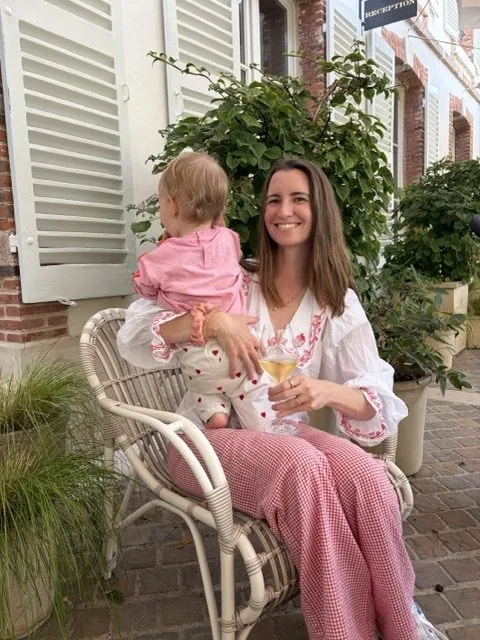
In August, my husband and I took our one-year-old baby overseas for her first experience travelling the great wide world! And so we did what any responsible first-time parents who were staring down the barrel of kid-related holidays for the next 18 years would do…we went to Champagne, France.
The region is made up of some 16,200 growers, 130 cooperatives and 370 Champagne houses. That is a lot of people all who rely on the region for their income. Maybe your brain goes straight to the household names like Moët & Chandon or Veuve Clicquot, but there are incredible family-run businesses in the region that are quietly creating magic.
What started as a destination chosen purely for my love of Champagne turned into a masterclass in tourism, brand and business. A fascinating dive into what has made this region not only create a drink that carries its own prestige worldwide, but also a destination that tourists flock to. It had my brain whirling on how we can take these lessons and bring them to regional Australia, so without further ado…
Lesson one: Collective governance (the Comité)
Did you know that Champagne has a governing body? Created in 1941, Comité Champagne was one of France’s first regional joint trade associations. Ever since then it has worked in the joint interest of the Champagne houses and growers.
The Comité brings growers and houses to the same table. The system depends on both: the houses need the growers' grapes, and the growers need the houses' reach. It's a reminder that in a shared region, everyone's success is tied together. Together, they agree on shared rules for yields, harvest dates and protecting the Champagne name.
By banding together over the last 85 years, both the region and the brand are thriving. Champagne is a drink of celebration and a bucket list destination.
Understanding your interdependence with other operators in your region is critical. A destination's tourism offering only gets stronger when operators work together. Backing the brand your regional tourism board has built, contributing to co-op campaigns, forming relationships with industry partners and organising collaborations are far stronger tools than always going it alone. So what's one way you could be part of the collective this year?
Lesson two: Limits create value
The idea of limiting how much can be harvested per hectare may feel restrictive at first glance, but once you step back you can see the value.
At a family-run estate, our tour guide explained that the same rules apply to everyone, from the smallest family grower to the biggest house. The Comité sets how much can be harvested and when, so no one can flood the market or cut corners at the expense of the region's reputation. Small and large players are held to the same standard, and they all benefit from it. Champagne keeps its value and its prestige. And, importantly, the small family-run businesses that have been passed down generation to generation continue to have their place in the ecosystem.
A cap doesn't necessarily mean selling less or making less money. It means being deliberate about what you limit so you can protect, improve or increase the value of what you sell.
So, what is your version of a cap?
- Is it the maximum number of guests before the experience declines (crowds, wait times, reduced service)?
- Or how many days in a row can you realistically work without hitting burnout?
- Or maybe your destination’s free camping spots are crowded and a permit system needs to be implemented before reputational damage occurs?
Lesson three: Playing the long game
Most Champagne isn't made from a single harvest. Non-vintage Champagne is a blend of several years, and in good years surplus wine is held back in reserve. That reserve smooths out the lean years, when the harvest isn't as strong, and keeps the house style consistent, so a bottle tastes like that brand every time (The best years also get bottled on their own as vintage Champagne, but that's the exception rather than the rule).
A great Australian example is the Big Red Bash. After running since 2013 (apart from a Covid pause), the organisers took a "gap year" in 2025. Building a festival from scratch in the Simpson Desert is an enormous effort, and they recognised the team needed to reset so the event could come back stronger. It wasn't an easy call, given the local businesses that rely on it, but it's a lesson in protecting the long-term health of something you've built.
The everyday version is consistency. Using your brand guidelines and posting content that genuinely looks and sounds like you will build trust over time. On the other hand, rushing out a generic AI-made poster can quietly erode it. Slowing down and doing things properly rarely feels exciting but it's what makes customers believe in your brand.
David Ogilvy, known in advertising industry circles the 'Father of Advertising', described the very common habit of getting bored with your own brand and marketing in this way: "It takes uncommon guts to stick to one style in the face of all the pressures to 'come up with something new' every six months. Golden rewards await the advertiser who has the brains to create a coherent image, and the stability to stick with it over a long period."
Great things take time. Champagne wasn't built in a season, and your brand doesn't have to be either.
Lesson four: Terroir, or sense of place
Champagne sells the place, not just the product. Terroir is the idea that soil, climate, landscape and people combine to create something that can't be replicated elsewhere. In Champagne, the chalky soils and cool climate are part of why the wine tastes the way it does, and why the name is legally protected. Everything a visitor sees, from cellars carved into chalk to villages and vineyard plots named on labels, points back to where you are standing.
When the place is the product, protecting it becomes good business rather than a cost. And you don't need a big budget to do it. Many small growers in Champagne simply tell the story of their patch, their plot and their family. This story has been handed down the generations, tying their sense of identity to the very vines that grow in their backyard.
If you were to list five things that could only be true of your place, what would they be? And are you inviting your guests to experience them? Or are you just taking them for granted?
I may have thought I was simply going to Champagne to sip some delicious bubbles, and hold on to the illusion that I’m “not a regular mum, I’m a cool mum” for a little bit longer. But I walked away inspired by a region that has built a legacy to last. One where there is space for the big and the small, and they are all at the same table. It’s a place where you walk away inspired, amazed and, as the legend goes, feeling like you tasted the stars.
Ready to chat about your brand?
Drop us a line today for a free quote!