

Being placed on the World Heritage List carries with it prestigious benefits: global exposure, recognition for the quality of your tourism experience, and a rapid rise to the top of your nation's most valuable historical sites.
But actually making the list? That requires a feat of ambition and persistence coordinated at local, state and national level. The key requirement: Convince UNESCO's World Heritage Committee that your site demonstrates Outstanding Universal Value.
The Australian Cornish Mining Sites: Burra and Moonta Consortium first approached WOOF Media in early 2023. Representing a collaboration of local government and state bodies, the group was seeking World Heritage status for a collection of National Heritage listed copper mining sites and buildings in the Goyder and Copper Coast Council regions of South Australia.
The organising committee saw achieving the designation as a transformational opportunity for keeping the small towns of their region alive through bringing work for young people and allowing locals to develop new businesses. It also tapped into a strongly held community value of preservation of the culture, buildings, and other markers of their heritage.
Heritage Worth Sharing
For thousands of years, South Australia's Goyder region has been the traditional lands of the Ngadjuri and Narungga peoples. In the early years of colonisation, the distinctive green firelight of a Narungga campfire clued a settler to the fact that the land was abundant with copper.
Discovering a significant deposit of copper led to the establishment of two significant mines: one in the pastoral town of Burra and another 150km south-west at the portside town of Moonta. Thousands of Cornish miners and their families flocked to the region in the mid-1800s, bringing not only their mining expertise, technological knowledge, and engineering, but also their social and cultural customs, beliefs, and identity. Cornish mining technology propelled the trajectory of Australia's mining industry.
By 1850, Burra supplied five percent of global copper supplies, aided by steam power, smelting and other Cornish technical innovations. At 5,000 people, it was also the largest inland town in Australia. In Moonta, the Moonta Mining Company became the first mining company in Australia to pay one million pounds in dividends.
Additionally, the region hosts language, dance, songs, paintings, sand drawings, stone etchings and other artefacts of Ngadjuri and Narungga culture which has been preserved, despite the dispossession caused by European settlement.
Our Task
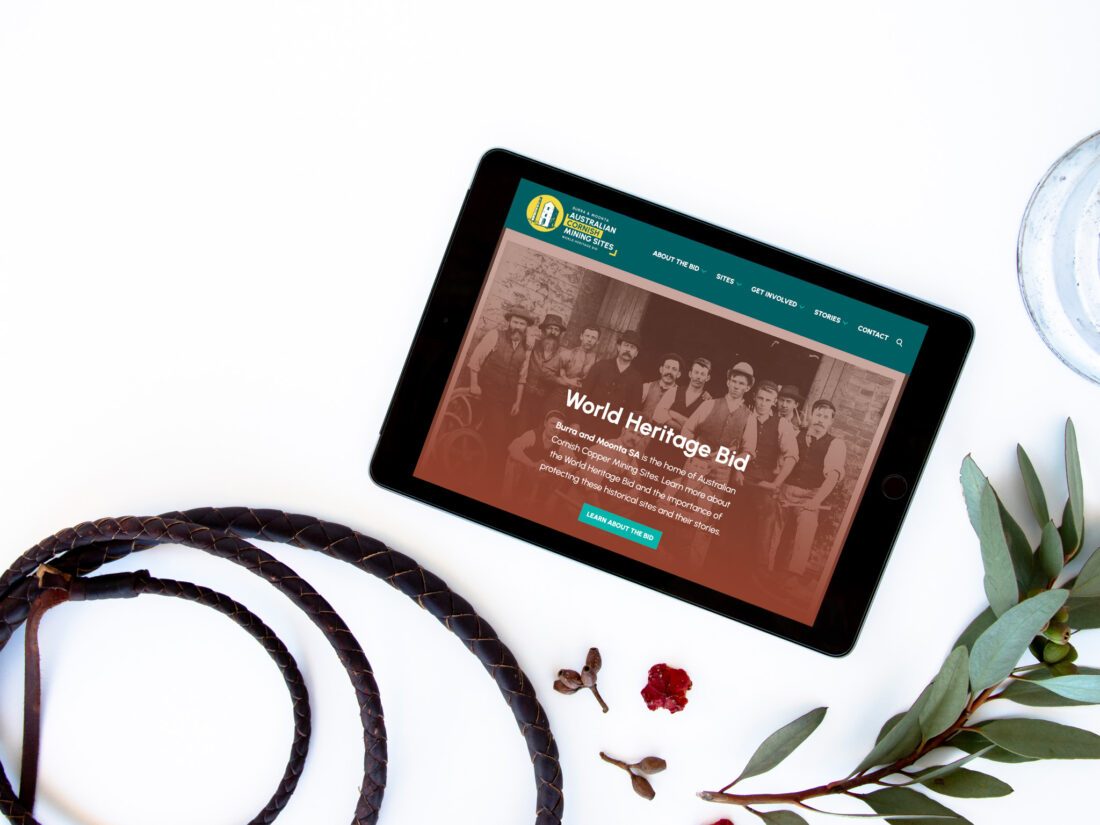
A compelling application for a World Heritage listing needs to look and sound professional. Together with the application team, we developed a thorough picture of the land and its bygone mining culture. Cornish immigrants adjusting to a new way of life were leaning heavily on their homeland's superstitions, regional tartan, and familiar architectural styles. We turned to these influences as inspiration for the brand identity.
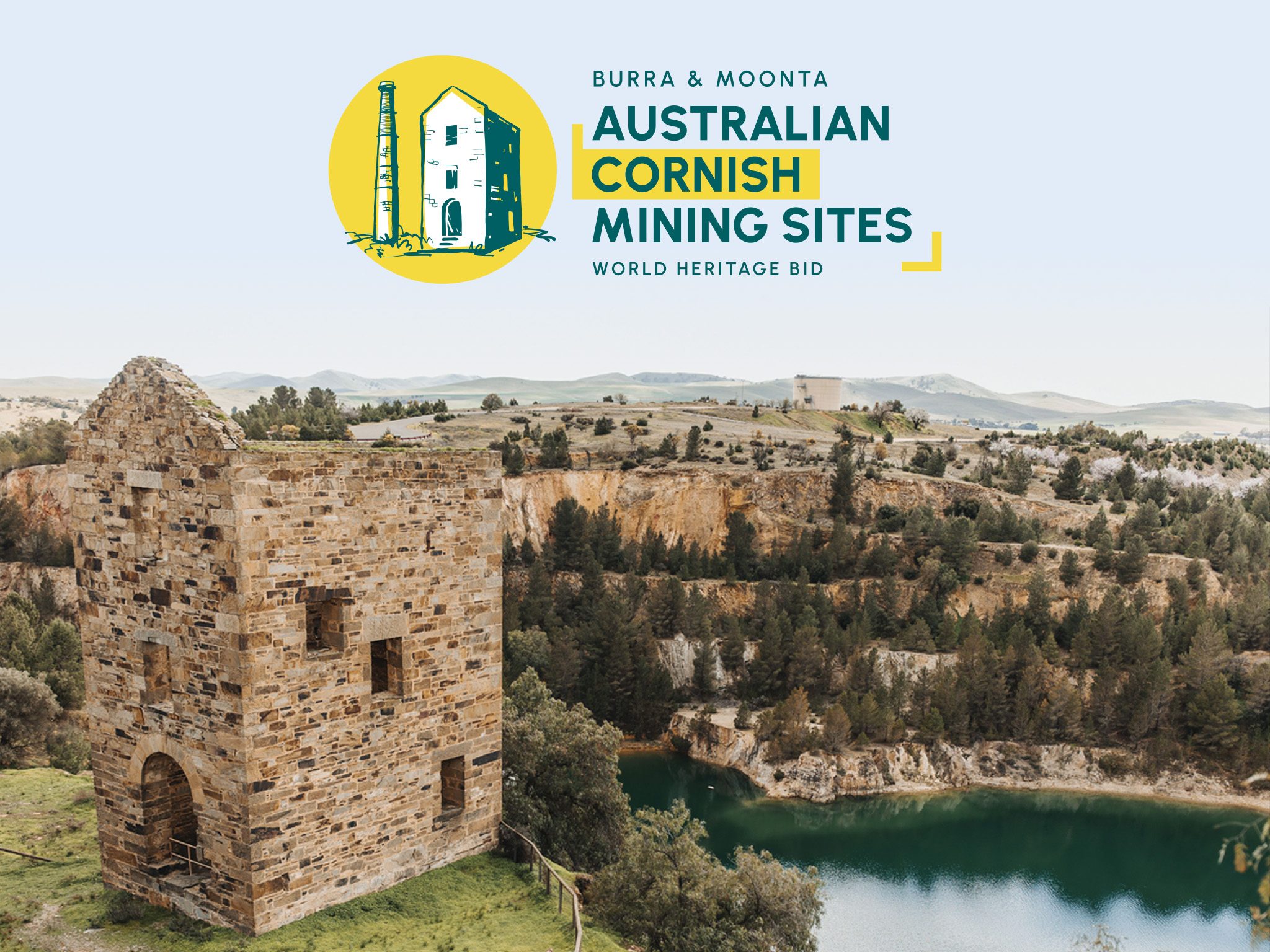
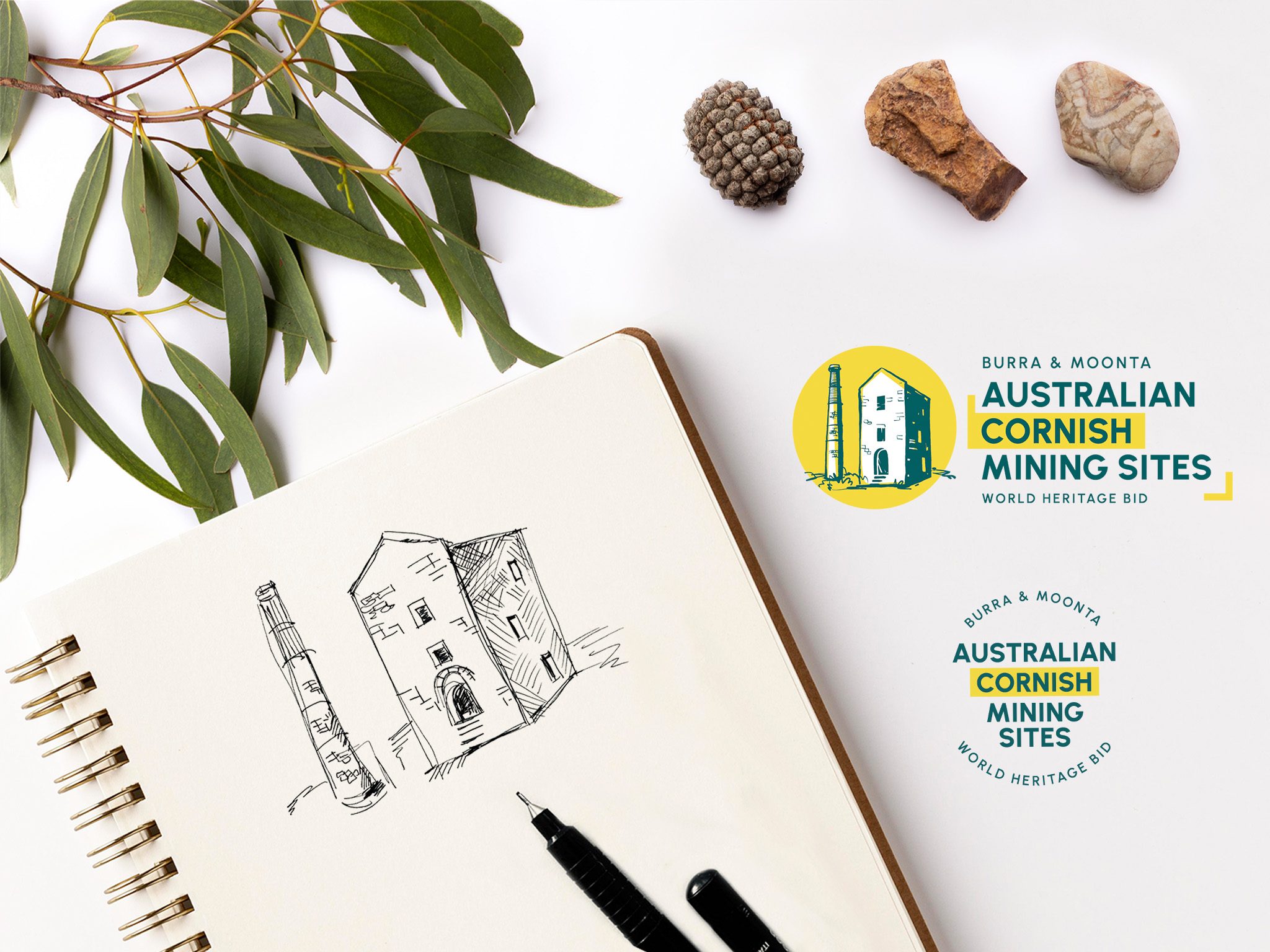
For the logo, mining took the focus with Moonta's iconic Hughes Enginehouse and its round chimney depicted. A feature of the local landscape since 1865, this building housed a Cornish beam pumping engine which allowed ore to be mined below water levels. It is a fitting emblem for the project.
The chosen colour palette features yellow/stone as a reference to wheat crops, beach, copper, while blue/aqua/green links to malachite, the Copper Coast and ocean.
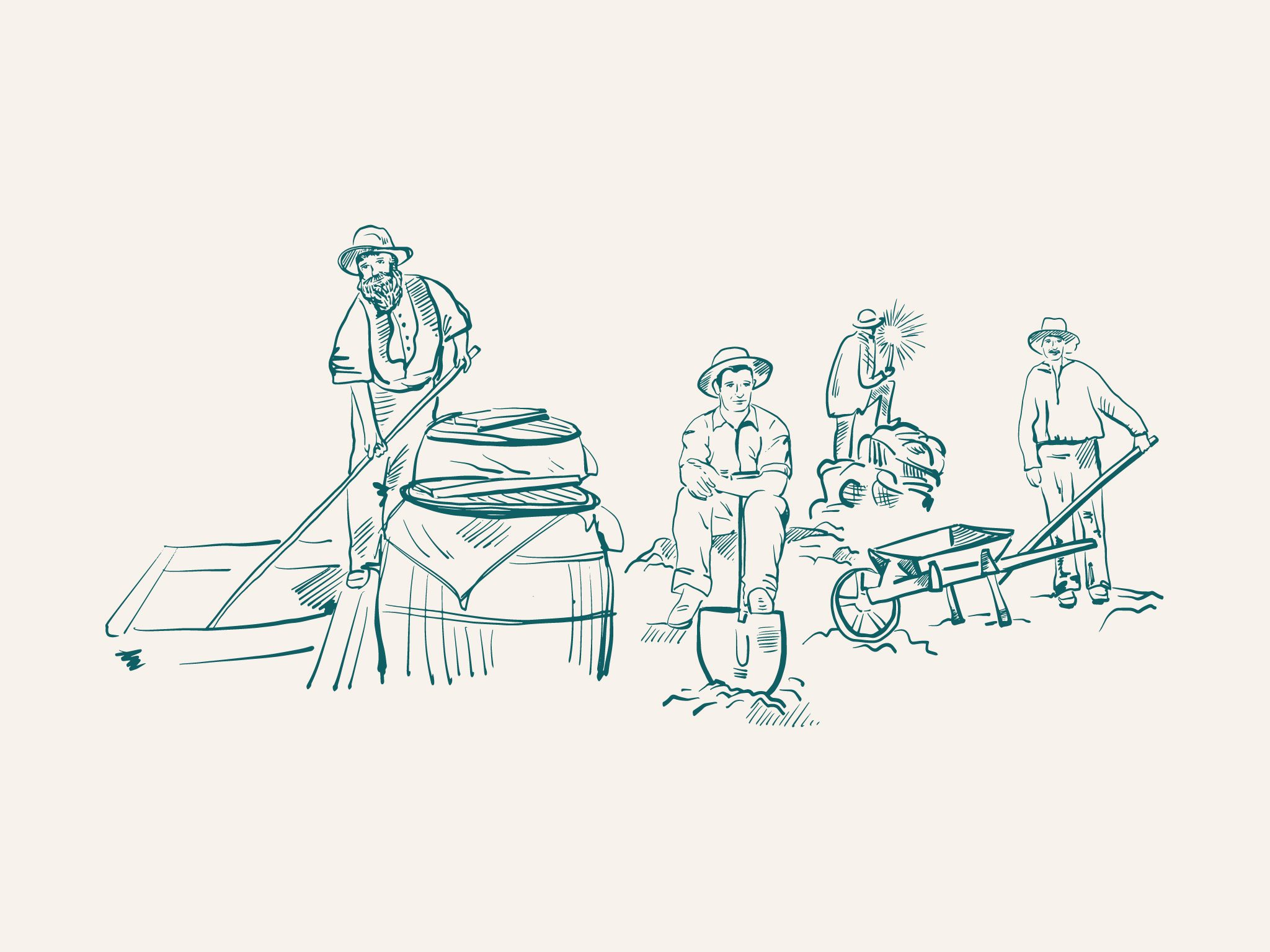
Hand-drawn illustrations bring to life early scenes of the mines and townships' residents. Women in bonnets, brick towers and men with shovels feature throughout the promotional materials.
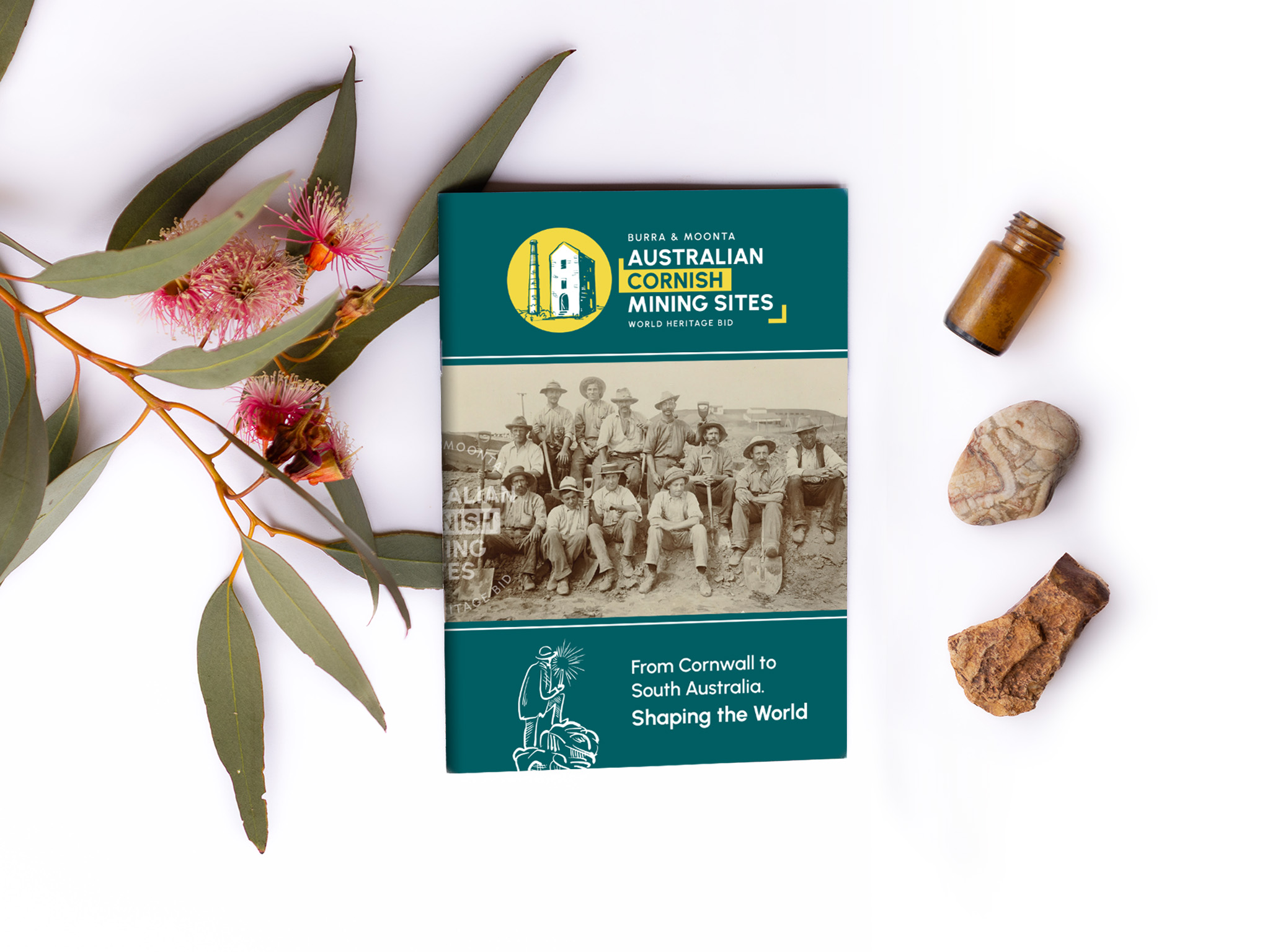
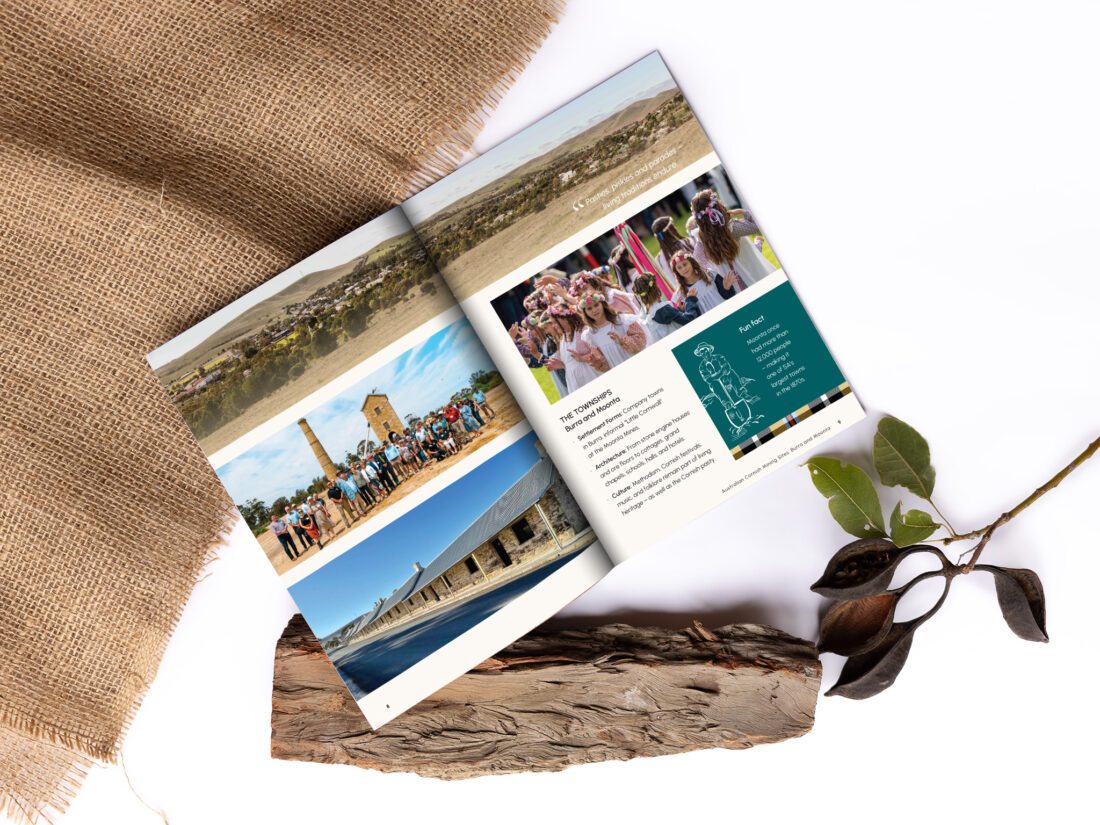
The brand extends across a website and a 12-page print brochure.
The World Heritage Designation Process
The Australian Cornish Mining Sites: Burra and Moonta World Heritage Bid is currently on the UNESCO World Heritage Tentative List.
It generally takes several years to find out if your application is successful. First, you must convince federal government bodies of the site's importance and be added to your country's official Tentative List. Next comes a formal nomination to the International UNESCO World Heritage Committee, which oversees these designations. Whether the site meets one of a criteria of 10 attributes to demonstrate 'Outstanding Universal Value' is carefully litigated via this application. An independent panel of experts visits the sites and assess the applications' merits. Lastly, the annual committee meeting will make a formal decision about which applicants are ready to attain the official designation.
In 2025 the Australian Cornish Mining Sites: Burra and Moonta Consortium presented UNESCO with its application for preliminary assessment. If all goes well, the Consortium aims to be Australia's 2028 nominee for World Heritage consideration.
In 2025 the State Party, on behalf of the Australian Cornish Mining Sites: Burra and Moonta Consortium, presented UNESCO with its application for preliminary assessment. Following a positive outcome from the Preliminary Assessment process, the earliest technical slot to nominate ACMS to the UNESCO World Heritage List is February 2028, with the earliest possible inscription in July 2029.
The process is lengthy and the WOOF Media team is proud to support the Australian Cornish Mining Sites World Heritage Consortium while it strives to achieve this ambitious vision for their community.
WOOF Media took the time to listen, understand the stories of Burra and Moonta and appreciate the deep passion our communities hold for these nationally significant heritage sites. Through their thoughtful and collaborative approach, they have created a compelling brand and digital presence that is helping raise the profile of the Australian Cornish Mining Sites on an international stage.
How can we help?
We'd love to hear about your marketing challenges and see if we could be the right fit to help you get results like these.